How Whittier's City Hall Was Reshaped Three Weeks Before the Election — Part 2
Three weeks before the April 14 election, Whittier locked in three years of police raises. Here's what's in the contracts the new council is inheriting — and what it will cost.
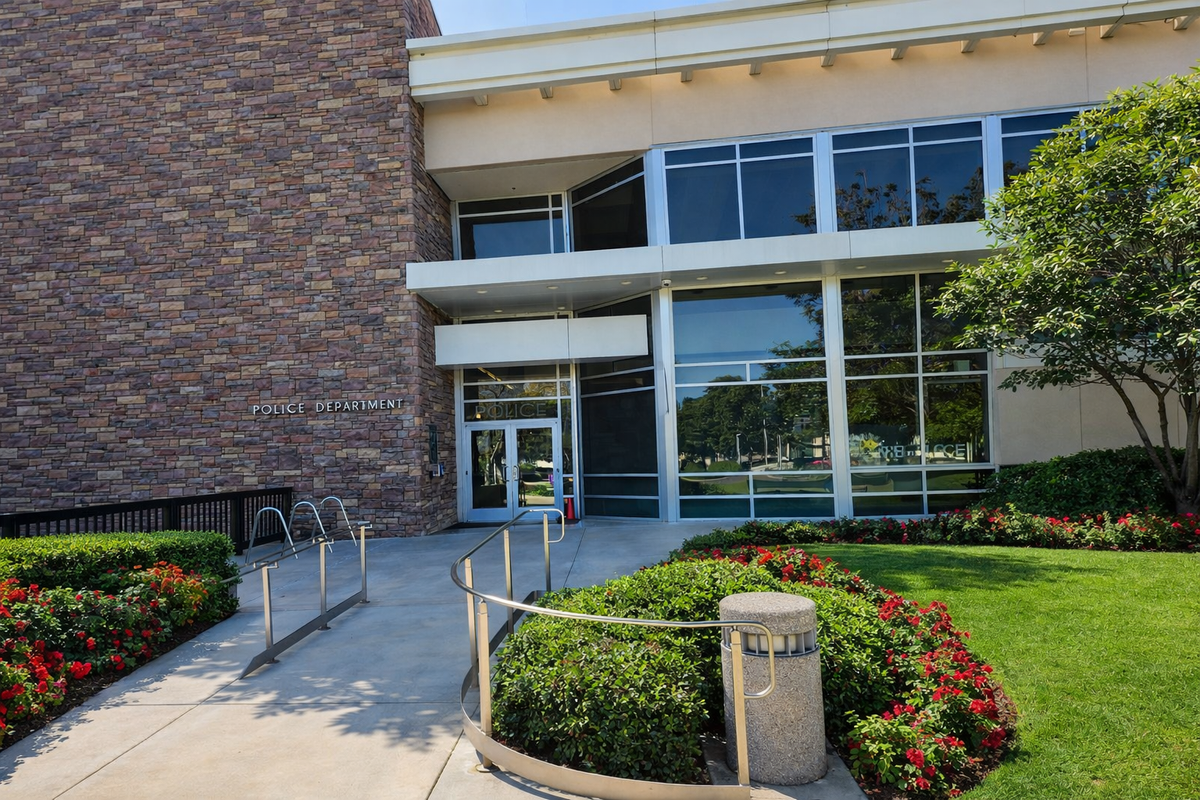
On March 24, the same city council meeting that restructured Whittier's city hall also approved new three-year labor contracts for the Whittier Police Officers Association and the Whittier Police Management Association, both running through June 2029.
Like the city hall package covered in Part 1, these contracts were approved three weeks before the April 14 election that removed Mayor Joe Vinatieri, Councilmembers Fernando Dutra and Octavio Martinez from office. Mayor-elect James Becerra, Councilmembers-elect Vicky Santana and Aida Macedo — who won that election — had no vote on either agreement.
Whittier Informed is not suggesting these contracts are unreasonable. Police compensation in California is competitive by design — departments compete for qualified officers in a tight labor market, and Whittier is no exception. The questions worth asking are about timing, transparency, and what the incoming council now inherits.
The existing police contracts were set to expire June 30, 2026 — new agreements were needed. However the council had until that date to finalize them, including after the new council was seated on April 28. The specific terms negotiated and the decision to approve everything on March 24 were choices made by the outgoing majority.
Raises Across the Ranks
Whittier's police department has two labor groups. The Whittier Police Officers Association covers frontline sworn personnel: patrol officers and sergeants. The Whittier Police Management Association covers police leadership: lieutenants and captains. Think of them as two separate unions within the same department, one for the officers doing the work and one for the managers overseeing them.
Both groups received the same raise structure: 9% raise effective July 1, 2026, 8% raise in 2027, and 8% raise in 2028 — adding up to roughly 27.7% over three years.
In dollar terms that means a Police Officer at the highest pay level goes from roughly $10,304 per month today to approximately $13,158 per month by July 2028 — before any specialty pay, overtime, or benefits. A Police Sergeant at the highest pay level goes from roughly $13,150 per month to approximately $16,792 per month.
Police management sees even larger numbers. A Police Lieutenant at the highest pay level reaches approximately $20,362 per month by 2028. A Police Captain tops out at approximately $23,580 per month — nearly $283,000 per year in base salary alone.
Those are base salaries. The full compensation picture is considerably higher.
Layer by Layer: Beyond the Base Salary
Both contracts include a layered system of additional pay that stacks on top of base salary. Understanding the full picture requires looking at all the pieces together. Importantly the 27% raise doesn't just increase base salary in isolation — every specialty pay provision is calculated as a percentage of the base. So as the base salary rises each year, the dollar value of every add-on rises with it. An officer with multiple assignments and certifications sees their total compensation grow by more than 27% in real dollar terms.
Officers and sergeants can receive additional pay for POST certifications, which are professional training certificates issued by California's police standards board. An officer with an Advanced POST certificate receives an additional 11% on top of base salary. A sergeant with a Supervisory POST certificate receives up to 13%. Detectives and traffic investigators receive an additional 7% for their assignments. Field training officers, motorcycle officers, canine officers, school resource officers, and others receive an additional 5%.
Education pay adds another layer. An officer with a bachelor's degree receives an additional 4% on top of base. A master's degree adds 5%.
For management the stacking goes further. A lieutenant with both a Supervisory POST certificate and a Management POST certificate receives a combined 22% added to base salary — on top of education pay, special assignment pay, and longevity.
Longevity pay adds between $2,000 and $8,500 annually depending on years of service, paid on top of everything else.
A fully loaded Police Officer — with an Advanced POST certificate, a bachelor's degree, a detective assignment, and 20 years of service — could reach approximately $197,000 per year by 2028 before overtime. A fully loaded Lieutenant with maximum certifications, a master's degree, and a special assignment could approach $340,000 per year — closer to the City Managers salary — before overtime.
The contracts also include annual uniform allowances of $1,200 for all sworn personnel, paid each December.
Vacations, Health Scans, and Quantico
Both contracts include provisions worth examining beyond base salary and specialty pay.
Police management received an expanded vacation cashout benefit — lieutenants and captains can now convert up to 200 hours of unused vacation into cash every year. By 2028 a lieutenant earns roughly $117 per hour, making that cashout worth up to $23,400 annually. A captain earns more — their 200 hours would be worth approximately $27,200.
For context, most private sector employees either lose unused vacation at year end or carry over a limited balance. Converting five weeks of unused vacation to cash annually, on top of an already significant salary, is a benefit that does not exist for most people.
The WPMA contract also includes a new health benefit: the city will pay up to $2,000 every two years for a heart and full-body health scan for lieutenants and captains. It is a meaningful benefit for employees in a physically demanding profession.
Also new in the management contract is a provision for leadership development. Lieutenants and captains who complete certain executive training programs receive a one-time $1,000 payment per course. The programs listed include POST Command College, the California Police Chiefs' Executive Leadership Institute, and the FBI National Academy.
The FBI National Academy is not a local seminar or an online course. It is a 10-week residential program at the FBI's training complex in Quantico, Virginia, where the bureau trains law enforcement leaders from agencies across the country. An officer attending is away from Whittier for 10 weeks — almost certainly on paid city time, with travel and housing costs on top.
The program is prestigious and selective. It is also worth noting that the incoming council now oversees a police department whose leadership is being financially incentivized to train at a federal facility, at the city's expense, with a $1,000 bonus upon return.

The Disability Pay Increase
One provision in the WPOA contract that drew no public discussion is a significant increase in disability pay for non-job-related injuries and illnesses. The biweekly payment increases from $672 to $1,200 — a 78% increase. No public explanation for the specific figure appears in the agenda documents.
The One Tradeoff
The contracts include one change to how overtime is calculated. If an officer takes a sick day, vacation day, or holiday and then comes in to work later that same day, those leave hours no longer count toward overtime eligibility. It is a modest change compared to the raises, which grow every officer's paycheck for the next three years.
A Commitment Without A Price Tag
The fiscal impact section states that future year costs will be funded through existing reserves — without specifying how much those costs will be. Both contracts run through June 2029. The incoming council cannot renegotiate them — they inherit a three-year financial commitment whose total cost to Whittier taxpayers was never publicly disclosed.
What The New Council Inherits
When Becerra, Santana, and Macedo are seated on April 28, they inherit two police contracts they did not negotiate and cannot reopen until they expire in June 2029. A comparable cities list — the benchmark used to determine market rate in future salary negotiations — locked in for up to nine years, with any changes requiring mutual agreement between the city and the union. And a compensation structure that grows automatically with each passing year.
The March 24 meeting was a single agenda item. It touched the City Manager, city hall's organizational structure, executive compensation, and both police unions — all at once, all three weeks before the election that changed the council's majority.
The decisions were made. The election was decided. What happens next is up to the council voters chose — and the residents watching.
This analysis is based on publicly available documents from the City of Whittier's March 24, 2026 City Council agenda, including the WPOA Memorandum of Understanding 2026-2029, the WPMA Memorandum of Understanding 2026-2029, and Resolution No. 2026-15.