Whittier PD Holds Public Viewing on Its Military Equipment Report
See how often WPD's drones, armored vehicle, and other military-grade gear were actually deployed in 2025.
A 2021 state law requires the Whittier Police Department to publicly report on equipment California classifies as military-grade, from armored vehicles and drones to specialized rifles and crowd-control tools.
To meet that requirement, WPD released its 2025 use report on July 17. It lists everything the department owns and how each piece of equipment was used. Residents can review it and ask the department questions directly at a public meeting on Wednesday, August 5, from 4 to 7 p.m. in the WPD Community Meeting Room.
The law only covers physical equipment. Tools like license plate readers and other software-based surveillance fall outside it entirely.
In the report's introduction, Police Chief Aviv Bar wrote that although the term "military equipment" may sound alarming, much of what's on the list consists of specialized tools California police departments have used for decades.
How the equipment was used in 2025
Drones. WPD flew drones 233 times last year. The most common reasons were responding to burglaries or burglar alarms (39 times) and checking trespassing complaints or building rooftops (29 times). Drones were also used to observe protests 20 times and to monitor homeless encampments 14 times. Other uses included searching for missing people, responding to shots-fired calls, and supporting SWAT warrant operations.
Armored vehicle. WPD's armored vehicle, a 2015 Ballistic Armored Tactical Transport (BATT), was deployed 19 times. Seven of those were SWAT warrant services, each on a different date between March and November. The other 12 came during patrol responses involving vehicle barricades or armed individuals. The report does not give dates or further detail for those 12 uses.
Each of the seven SWAT operations also involved a Kinetic Breaching Tool, a device used to force open locked doors, and a Noise Flash Diversionary Device, commonly called a flashbang, which creates a bright flash and loud sound to disorient a suspect. The report shows all three tools were used together on the same seven dates.
Mobile command vehicle. A vehicle that serves as a mobile police command post was used three times, each for a large public event.
Everything else stayed on the shelf. The department reported zero operational uses of its 40mm less-lethal launchers, less-lethal shotguns, chemical agents, specialized rifles, and PepperBall launchers in 2025. The report notes that some of this equipment is used regularly for training, but that training use is not counted in these numbers.
What the department owns, and what it costs
WPD's inventory includes 26 drones across five models, more than 90 rifles and specialized firearms, 52 less-lethal shotguns (one carried in every patrol car), 64,000 rounds of rifle ammunition, and more than 500 tear gas and chemical munitions .
The report lists an annual maintenance cost for most categories. Rifle ammunition is the largest ongoing cost, at about $20,000 a year for 5.56mm rounds and $2,000 for .308 rounds. The mobile command vehicle costs about $11,000 a year to maintain. The armored vehicles cost about $10,000. Drones cost about $5,000 a year in maintenance and batteries. Chemical agents and breaching tools carry no listed annual cost.
Added together, the figures in the report come to roughly $62,000 a year in recurring costs, not counting what the department originally paid to buy the equipment.
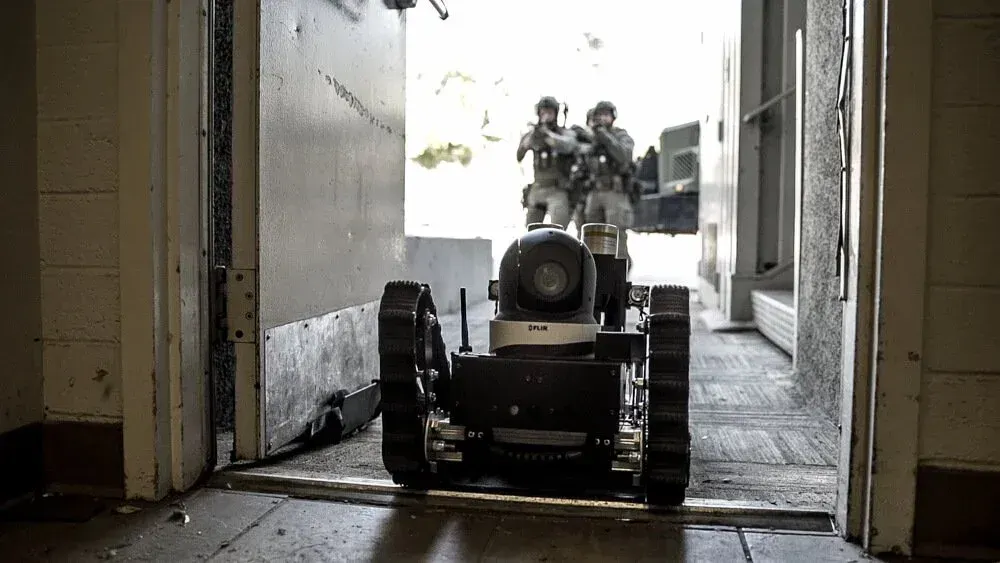
Some of the biggest purchases: the armored BATT vehicle cost $309,000. The mobile command vehicle cost $250,000, paid for with a 2006 federal grant. A pair of tactical robots cost $33,500. Other items cost far less.
The Next Round of Equipment
The report includes a section listing equipment the department expects to acquire next, including a new armored vehicle and an expanded drone program. But by the time the report became public, City Council had already approved both, three days earlier.
On July 14, council voted to approve the BATT-X, a replacement for the department's aging 1970s Peacekeeper armored vehicle, at a cost of $428,033.34.
In a separate vote the same day, council approved an expanded drone program called Drone First Responder, or DFR. The DFR program adds about $1.05 million in new drones to the department's existing technology contract with Axon Enterprise, bringing that five-year deal to $3.44 million total. Under DFR, drones launch from a fixed dock and fly remotely, guided by an operator, rather than being carried and launched by an officer at the scene.
The report also describes a policy that lets the department restock certain equipment without going back to City Council first. If supplies run low, the department can reorder up to half its stock of an item in a given year without new council approval. In an emergency, the department can also get more equipment from other law enforcement agencies or the California Office of Emergency Services with sign-off from the chief alone.
Oversight and complaints
WPD's Professional Standards Division reviewed the department's military equipment use for 2025 and reported finding no violations of the department's equipment policy. The department said it received no official complaints about military equipment use during the year.
Residents with questions or concerns can contact the Professional Standards Division, reachable through the department at 562-567-9200 or in writing to Sgt. Glenn Hedgpeth at the Whittier Police Department, 13200 Penn Street.
The full report, the equipment inventory, and the department's use policy will all be on hand at the August 5 meeting, along with staff to answer questions in person.