How Whittier's City Hall Was Reshaped Three Weeks Before the Election — Part 1
Three weeks before the April 14 election, Whittier's outgoing council reshaped city hall. New positions, new contracts, and a costly severance package now await the new council elected to change things.
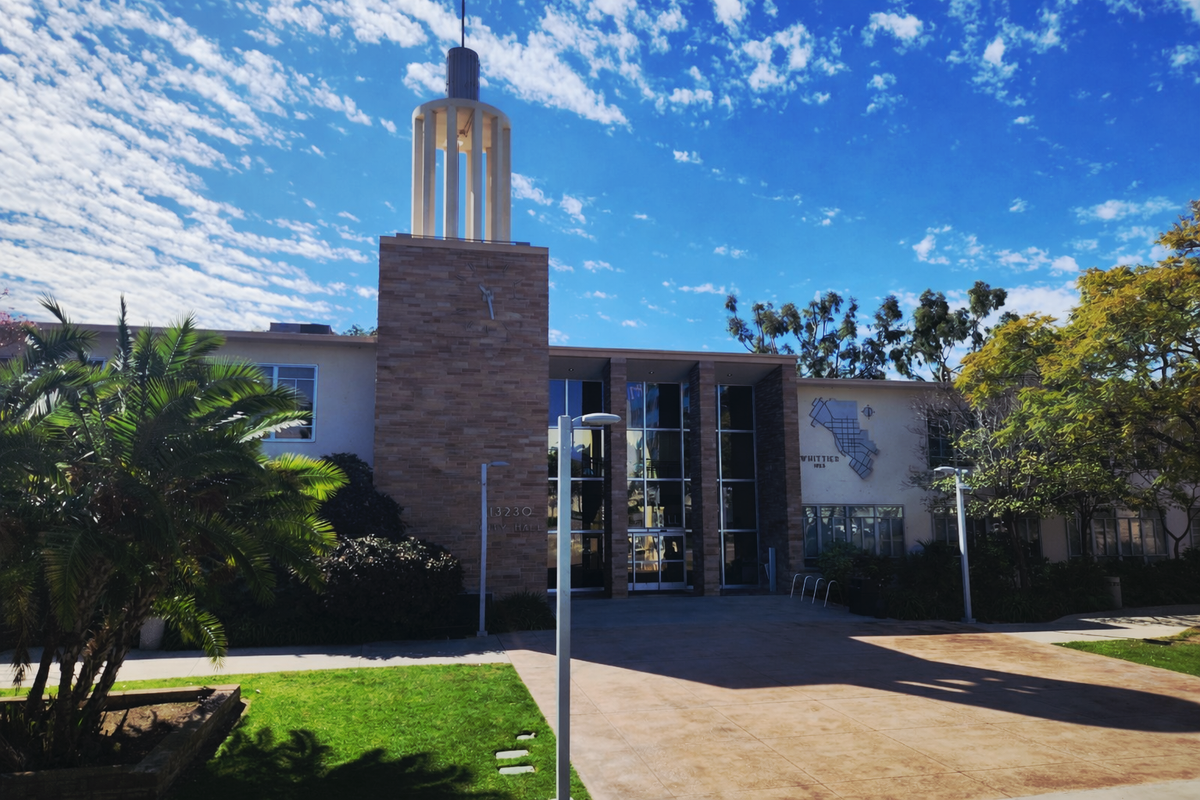
On March 24, the city council took a series of actions that will define how the city operates for years to come. This was three weeks before the April 14 Whittier General Municipal Election, when voters would go to the polls and vote-out three incumbent council members from office.
Mayor Joe Vinatieri, Councilmember Fernando Dutra, and Councilmember Octavio Martinez, all of whom would lose their seats on April 14, voted to approve a sweeping package of compensation increases, organizational restructuring, and contract amendments affecting virtually every level of Whittier city government. It passed without the input of the incoming council members voters had chosen to replace them.
Mayor-elect James Becerra, Councilmember-elect Vicky Santana, and Councilmember-elect Aida Macedo — all of whom ran campaigns calling for greater transparency, accountability, and faster project timelines — will inherit the results of that vote when they are sworn in on April 28.
Whittier Informed is breaking this down in two parts. This article focuses on city hall employees and the restructuring of city leadership. Part two will focus on the police department.
The Contract That Binds the Next Council
On May 5, 2025, the City Council hired City Manager Conal McNamara at a salary of $306,648 per year. Less than one year later, three weeks before the election that removed the council majority that hired him, that agreement was amended — approving a 19% raise bringing his salary to $365,000 per year.
Amendment No. 1 sets McNamara's annual base salary at $365,000 — or $30,417 per month — and restructures his severance package, making it significantly more expensive for the incoming council to replace him.
Unlike the police contracts which were set to expire, McNamara's contract had no expiration date. The amendment was not required — it was a choice made by the outgoing council.
If McNamara is terminated without cause, the city must pay a lump sum equal to 12 months salary ($365,000), plus all accrued leave. That amount increases by one month for every year he is employed, up to the maximum of 18 months allowed by California law. At 18 months the severance payment alone reaches $547,500. The city would also continue providing health, dental, life, disability insurance, and a city vehicle for 12 months or until he obtains new employment — whichever comes first.
The amendment also guarantees McNamara the same raises approved for department heads, now and in the future. Any raise approved for city directors automatically applies to him as well. Under these raises, his base salary would reach approximately $468,000 by July 2028.
The newly elected city council, who campaigned on change and accountability, now faces a significant financial challenge. If they determine a change in city management is in Whittier's best interest, termination without cause would cost taxpayers up to $547,500, per the new agreement.

More Bureaucracy, Not Less
Among the changes approved on March 24 was an expansion of the city's administrative structure — adding layers rather than reducing them.
The Assistant City Manager position had been vacant since Shannon DeLong left to become City Manager of Cerritos. An Assistant City Manager normally serves as a general second-in-command, coordinating across all departments, acting in the City Manager's absence, and helping implement council priorities without running any specific department.
Instead of recruiting a replacement for that role, the council created two brand new positions: a Deputy City Manager-Administration and a Deputy City Manager-Operations.
But first, they gave salary increases to all executive management employees: 9% raise effective July 1, 2026, 8% raise in 2027, and 8% raise in 2028, adding up to roughly 27.7% over three years. In addition, seven of those director positions will receive a separate 2% salary increase because a study showed those positions were below market rate.
Directors receiving raises include the Director of Community Development, Director of Finance, Director of Human Resources and Risk Management, Director of Parks Recreation and Community Services, Director of Public Works, and City Clerk.
The city's own argument was that these are highly qualified professionals who deserve competitive, market-rate compensation — then created new positions to supervise them.
The Deputy City Manager-Administration will oversee the HR, City Clerk, Finance Department, Parks Recreation and Community Services, and the Library. The Deputy City Manager-Operations will oversee Public Works, Community Development, the Parks and Trees Division, and Transit operations.
The qualification requirements for these roles are worth examining. Both positions require just five years of experience in their respective fields and a bachelor's degree. Neither requires expertise in the departments they will also oversee — the Deputy City Manager-Administration will supervise Finance, Parks Recreation, and the Library without any required background in those areas. The Deputy City Manager-Operations will oversee Community Development and Transit without any required experience in either.
The directors now working under these new positions just received raises because the city deemed them highly qualified market-rate professionals. The people hired to supervise them will need less documented expertise to get the job.
Executive management employees also received an expanded vacation cashout benefit — up to 200 hours of unused vacation can be converted to cash every year. At director-level salaries that can add tens of thousands of dollars annually on top of base pay, with no total cost disclosed in the public-facing documents.
One of the defining issues of the April 14 election was that Whittier moves too slowly. The incoming candidates ran on fixing that. The result was more layers, not fewer.
Capital projects, budget approvals, permitting timelines, and affordable housing — these are the types of decisions where an extra layer of review creates real delay.
Two Different Types of Employees
Most Whittier residents interact with the city through the people at the bottom of the salary scale — the worker filling the pothole, the library assistant helping their kid find a book, the park maintenance worker keeping the grass cut. Those are the faces of city government that residents actually see and depend on daily.
Those workers start at roughly $36,000 to $45,000 a year. A Street Maintenance Worker at the highest pay level makes roughly $57,000. Library workers who stay for evening shifts get a shift bonus of 75 cents an hour.
That's roughly a 7x or 8x difference between the people filling potholes and directors. The City Manager's severance package alone would be worth more than nine years of a Street Maintenance Worker's salary.
To be clear, executive compensation at this level is not unique to Whittier. These are standard public sector salaries across California. The issue isn't that these salaries exist. It's that they were approved three weeks before an election by a city council that voters were already in the process of voting out, without disclosing the total cost, and without any input from the representatives voters had just elected. The city also did not provide an overall cost or even an estimate of the budget impact in any of the public-facing documents. Instead the agenda report simply states future costs will be covered by existing reserves — without specifying how much.
What The New Council Inherits
When James Becerra, Vicky Santana, and Aida Macedo begin their terms on April 28, the work of delivering on their campaign promises runs directly into these decisions made a month prior.
None of what happened on March 24 was illegal. The votes were properly noticed and publicly taken.
But the incoming city councilmembers were elected precisely because residents wanted something different. What they are inheriting is a city hall that was reshaped in the final weeks before the transition of power — with longer decision chains, protected leadership, and a three-year financial commitment whose total cost was never disclosed to the public.
Whittier residents showed up on April 14. Now they're watching to see whether the people they chose can actually deliver.
This analysis is based on publicly available documents from the City of Whittier's March 24, 2026 City Council agenda.