Whittier Council Adopts New Rules for How City Responds to ICE
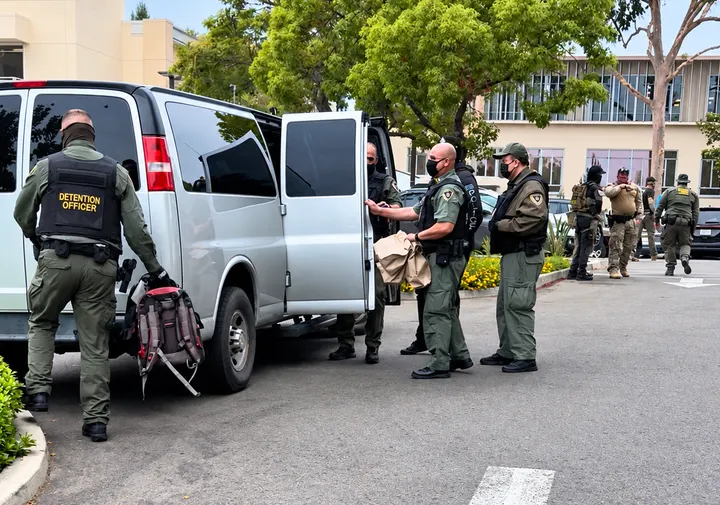
The rules came together after ICE was seen near the Whittier Public Library, and after Police Chief Aviv Bar explained to the council exactly how ICE ends up waiting outside for someone to be released.

The Whittier City Council voted July 14 to approve new rules for how the city responds when U.S. Immigration and Customs Enforcement (ICE) agents show up at or near city property.
Council members asked staff to write these rules after a June 12 meeting about ICE activity near city buildings. The city has already used the rules once: staff had employees shelter in place after ICE was seen near the Whittier Public Library earlier this month.
Why the city can control
Whittier can't control what ICE does. But the city can control how its own employees, buildings, and information respond when ICE shows up nearby.
The new rules cover three things: when police and city staff can talk to ICE, when the public gets told what's happening, and when the city council has to be told.
During the meeting, council members also got a plain explanation of something a lot of residents ask about: how a routine arrest at the police station can end with ICE waiting outside for someone to be released.
What the three rules do
Rule 64 tells city workers what to do if ICE shows up at a city building or event: Confirm ICE is actually there before doing anything. Tell a supervisor. Don't get in ICE's way. Don't share your opinion about it with ICE or with the public. Workers also can't post photos or videos from work during one of these incidents.
Rule 65 covers "shelter in place" — staying inside a building instead of going outside. A city manager, department head, or supervisor can call for this if it's the safest option. Only the city manager's office can talk to the media during one of these incidents.
Rule 66 says when the city manager has to tell the city council what's going on: The council gets told if ICE shows up at or next to a city building, if it disrupts city services, if it causes a shelter-in-place, or if there's a lot of public concern. But if ICE activity happens somewhere else in the community and doesn't affect city buildings, the rule says the council usually doesn't need to be told. The city manager also has the power to change what gets shared and when, if there's a safety or legal reason.
How ICE ends up outside a police station
Council Member Vicky Santana asked Whittier Police Chief Aviv Bar to explain what "we don't cooperate with ICE" actually means. Bar said state law — the California Values Act, known as SB 54 — stops local police from enforcing immigration law, working with federal immigration agents, or asking people about their immigration status. Whittier police have their own written policy on this, called Policy 428, posted online in the department's public policy manual.
Bar explained where ICE gets its information. Anyone booked into a California jail gets fingerprinted through a system called Live Scan, which checks their identity against county and state records. Those results get shared with the FBI. The FBI can then share that information with other federal agencies, including ICE. So if ICE is looking for someone who gets arrested in Whittier, they find out — not from Whittier police, but through that federal chain.
Because state law stops local police from handing someone straight to ICE inside the jail, Bar said that ICE agents instead wait outside on public streets for the person to be released.
Bar also said most people arrested in Whittier are released within two to three hours with a future court date, because of a Los Angeles County court policy on bail.
He added that, normally, city officials don't find out ICE is nearby through any formal notice.
“We find out that they're on the street usually from activists that show up, and then we know about it.”
What council members said
Council Member Aida Macedo said she's personally seen ICE near the city twice in the last month. She cited a string of ICE-related killings reported nationally that same week — federal officials acknowledged at least two of those killed were not the people agents were targeting — as part of her reasoning for supporting the new rules. She also tied her concern about ICE to her broader concerns about surveillance and privacy, something Whittier Informed has covered separately in stories about police technology purchases.
Mayor Pro Tem Mary Ann Pacheco asked staff to write a plain-language version of these rules that residents can read. She said people have asked her why ICE shows up outside city buildings, and she hasn't had a clear way to explain it beyond saying police don't cooperate with ICE.
Mayor James Becerra thanked Macedo for pushing the city to act, and said the new rules mostly put into writing things the city was already doing informally. He called the rules a work in progress that will keep changing.