The Murals at Rodeo 72 Weren't Supposed to Be There
The developer was supposed to build sculptural steel pavilions with historic photos of the Nelles School. Instead, they painted contemporary street art and asked the city to approve it after the fact.
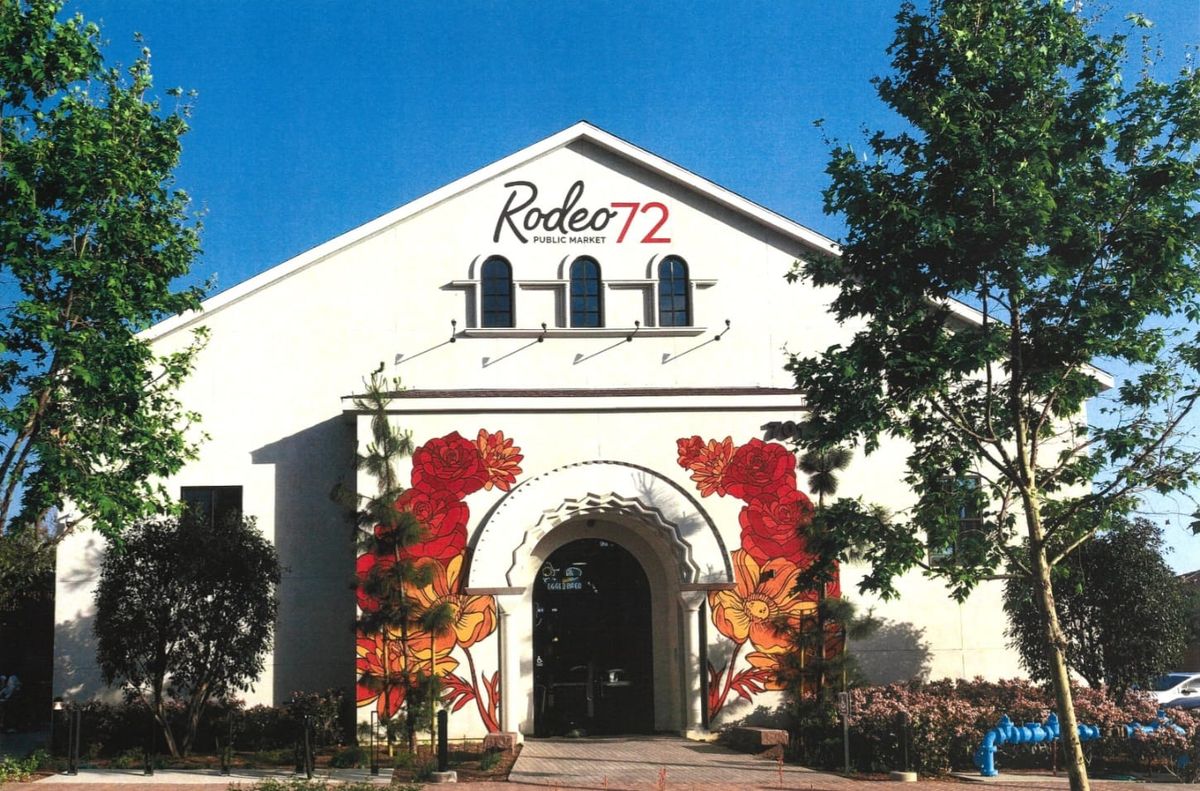
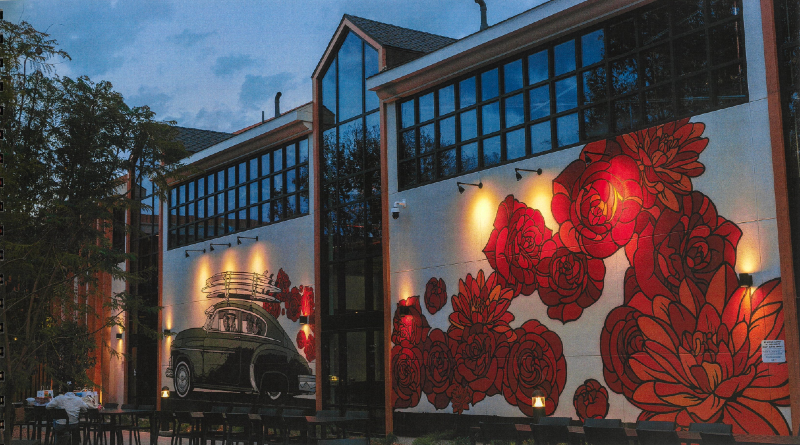
If you've paid a visit to Rodeo 72 Public Market at The Groves, you've seen the murals: a vintage lowrider trailing colorful flowers across the building's white facade, bold street art wrapping around corners, contemporary designs that pop against the Groves' beige hardscape.
The thing is, those murals were never supposed to be there. The developer didn't follow the city's approved plans. Instead of building the two sculptural steel pavilions the City Council signed off on in 2020, property owner Whittier & Sorenson LLC painted contemporary street art murals and asked for permission after the fact.
On March 10, the City Council said yes, completing a months-long process that flipped the city's public art review system on its head: installation first, approval later.
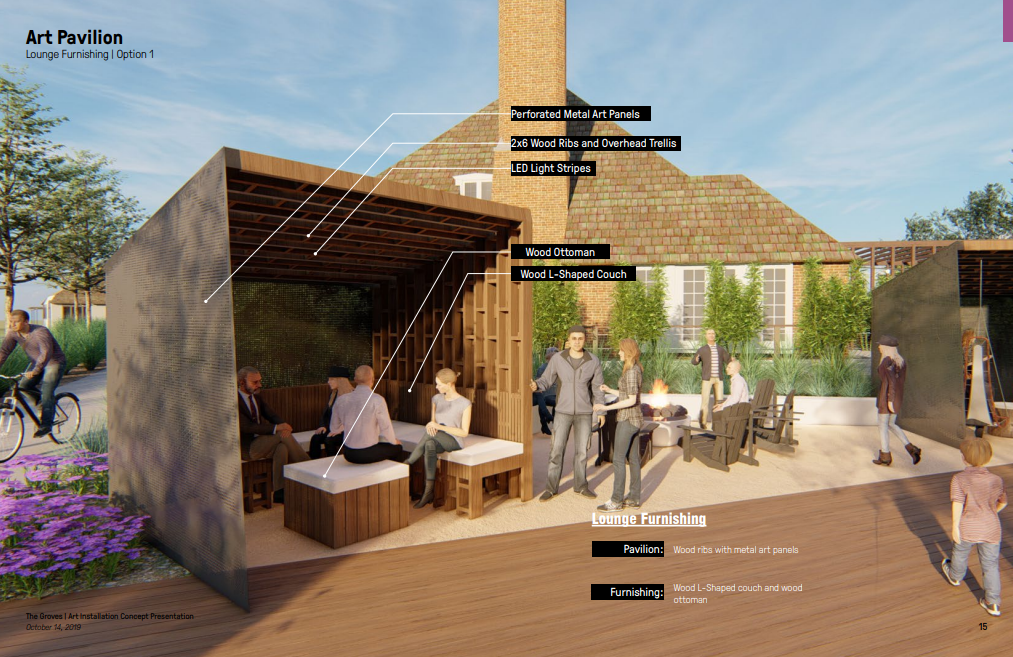
Here's what was actually approved: "Art Pavilions" designed as functional structures with covered seating for the public, walls that would cast light patterns at night, and a $170,000 price tag. Think museum-quality installation meets community gathering space, incorporating historical imagery of the site's past as a youth correctional facility.
Those pavilions were never built.
The company's letter requesting the change was clear about why the switch happened. The murals, owner Dan Almquist wrote, serve as "a meaningful contributor to the project's branding, marketing, and overall identity."
In other words: the approved pavilions didn't match the vibe. The marketing murals did. So the murals went up, approval or no approval.
(Letter from Whittier & Sorensen LLC to the City of Whittier requesting approval for murals / City of Whittier)
How Public Art Is Supposed to Work
Whittier's Art in Public Places ordinance ensures developments give something back to the community. Projects over $250,000 must either install qualifying public art or pay 0.5% of their construction costs into a city art fund.
The art has to be reviewed and approved before installation. Committees exist specifically to make sure what developers propose actually serves the public, not just the developer's brand.
When Brookfield Residential proposed a $1 million art program for the Groves in 2019, the company followed that process. Four art elements went before committees, then the Cultural Arts Commission, then City Council:
- Heritage Trail and Historical Trail Markers ($475,000) - installed
- Mockingbird Tree at the Commons ($239,000) - installed
- Poets Park ($159,000) - installed
- Art Pavilions at Heritage Court ($170,000) - never installed
The first three happened as planned. The fourth became a problem when Almquist's company bought the commercial property in December 2019, inheriting Brookfield's public art obligations.
What Actually Went Up
Instead of steel pavilions with historic imagery, Rodeo 72 got murals by David Flores, Estevan Oriol, and four other artists known for tattoo work, graffiti, and street photography. The centerpiece, "Still Dreaming" by Flores, features a Chevy Fleetline lowrider cruising across the exterior wall with surfboards strapped to the roof and flowers blooming in its wake.
The Art in Public Places Committee didn't review the murals until January 28, 2026, after they were already done. The Cultural Arts Commission didn't weigh in until February 23. The City Council didn't vote until March 10.
By then, telling the developer "no" would have meant demanding paint-overs on finished, professional murals visible to thousands of people. Both committees unanimously recommended approval. The Cultural Arts Commission added one caveat: a recommendation that "AIPP rules and regulations be followed to ensure that no art piece is created prior to review."
Translation: don't do this again.
The City Council approved the substitution without objection.
What Got Swapped
The 2020 approval called for architectural sculpture incorporating historical photographs of the Nelles School and Whittier's agricultural past, with functional public space, sophisticated perforation technique creating transparency and nighttime lighting effects, and permanent steel construction designed to last decades. What got installed instead were contemporary murals celebrating cruising culture and street art with no functional space, explicitly described in the owner's letter as serving "branding, marketing, and overall identity."
According to the cost breakdown submitted to the city, the developer spent approximately $193,591 on the murals and associated costs, exceeding the $170,000 budgeted for pavilions. The accountability issue isn't financial—it's that the developer chose what to install without city input.
City staff's March agenda report describes the murals as paying "homage to what once stood as a former youth correctional facility." But nothing in the imagery (a lowrider, surfboards, flowers) references the Nelles School, its history, or the young people who lived there. The "homage" exists in the artist statement, not the art itself.
The Two Problems
The retroactive approval creates two distinct accountability issues:
First, the process problem: A developer installed artwork without approval, then sought permission after the fact. This sets a precedent that the Art in Public Places review process is optional if you're willing to paint first and apologize later.
Second, the missed opportunity: If vibrant street art celebrating Whittier's cruising culture and Chicano heritage is what the community actually wants, why isn't the city proactively including culturally relevant artists in the planning process from the beginning?
The original 2020 proposal came from Brookfield's consultants: architects and landscape designers who proposed steel pavilions with historic photographs. It was professional, museum-quality work designed by people who do public art installations for a living.
The murals that actually got installed capture something about the city's identity that perforated steel panels with old photos of the Nelles School never would have. The problem isn't that they got painted. The problem is that the city never had the chance to help shape them, ensure they served public goals beyond marketing, or negotiate what the community would get in return for accepting a substitution.
When developers control the entire creative process and present finished work for rubber-stamping, the city loses leverage to ensure public art actually serves the public.
The Questions
Other questions remain unanswered: When exactly were the murals painted? Did the owner notify the city beforehand, or did staff discover them during inspections?
And the bigger questions: If the city wants culturally resonant public art that reflects Whittier's identity, who should be selecting the artists? If developers are going to substitute marketing-focused murals for approved functional art, what does the community get in exchange?
Rodeo 72 may have pulled off marketing-focused art this time, but what if the next developer's marketing art is too much like an advertisement?
What Comes Next
Whether that warning from the Cultural Arts Commission means anything depends entirely on what happens the next time a developer paints first and asks permission later.
But there's also an opportunity here. If the city wants public art that actually sparks cultural connection (art that feels like Whittier rather than generic development amenities), the Art in Public Places program could proactively bring artists like Flores into the planning process from day one. Not as vendors executing a developer's marketing vision, but as creative partners helping the city define what public art in Whittier should be.
The murals at Rodeo 72 are staying. The question is whether the process that put them there becomes the norm, or whether the city takes control of its own cultural identity.