Whittier Has No Plans For Whittier Boulevard
In 2025, the state transferred ownership of Whittier Boulevard to the city along with $16.7 million to help cover future costs. But the city has no plan for the road. Will $16.7 million be enough?

The City of Whittier spent years pursuing ownership of 7 miles of Whittier Boulevard from Caltrans. In 2025, the state formally handed it over, along with a one-time $16.7 million payment. But the relinquishment agreement, the official document transferring ownership from the state to the city, reveals the city took on far more than a road.
Under the terms of the agreement, the city accepted full ownership, maintenance, and liability for the boulevard — not temporarily, but permanently. The city also accepted the road in its existing environmental condition, including known contamination risks. Caltrans had identified 50 contaminated sites adjacent to the boulevard, with 11 still active as of December 2024. One of them, the Omega Chemical Corporation site at 12504 Whittier Blvd, is a federal Superfund site, meaning it has been designated by the U.S. government as one of the most seriously contaminated properties in the country. Once the transfer was recorded, Caltrans was no longer responsible for any contamination costs going forward.
The city agreed to all of it. And now, according to City Manager Conal McNamara, there is no plan.
Speaking during last week's 2026-27 fiscal budget review meeting, McNamara said that if the city council wants a plan for Whittier Boulevard, staff can put one together. But as of now, none exists for the 7-mile stretch the city worked years to acquire.
How the $16.7 Million Is Being Managed
Rather than spending the money outright, the city put the $16.7 million into U.S. Treasury bonds, a type of government-backed investment, which earned around $350,000 in interest this fiscal year. The goal is to use that interest to cover ongoing costs without touching the $16.7 million itself, except for one-time startup costs like equipment and trucks.
On paper, it's a cautious approach. But the numbers reveal a problem almost immediately.
City finance staff confirmed that personnel dedicated to Whittier Boulevard alone will cost $466,000 this year, already $116,000 more than the interest covers. And that's before repairs, upkeep, and outside contractors. When the city hires consultants for studies or surveys, those contracts can run six figures each. The agreement also transferred every traffic signal and streetlight along the full 7 miles to the city, each one requiring ongoing maintenance, electricity costs, and eventual replacement.
The interest isn't keeping up. And the $16.7 million, if left untouched as intended, can't fund improvements on its own.
It's also worth noting that the $16.7 million wasn't the state's first offer. According to the city, Caltrans initially offered around $5 million for the transfer before negotiations pushed the final number to $16.7 million. Even at $16.7 million, the money may not be enough.
Santana's Question
Councilmember Vicky Santana raised the harder question during the budget discussion: where does the money come from to actually improve Whittier Boulevard if the city is only spending interest?
It's a question without a clear answer, at least not yet.
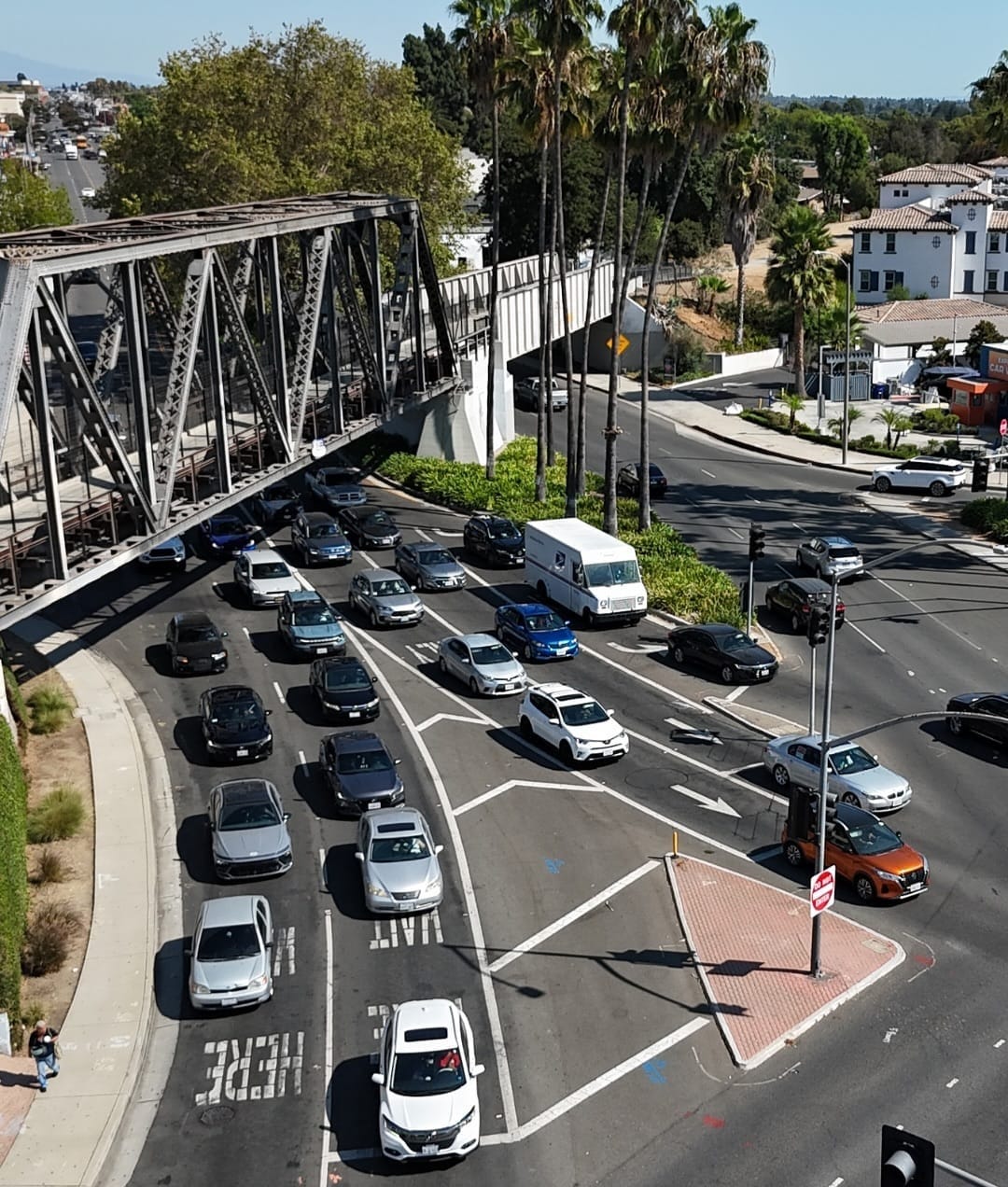
To understand what improvements cost, consider this: the construction projects currently underway at the Painter Avenue and 5 Points intersections, two of the busiest spots along the boulevard, are running up to $7 million combined. Those projects are paid for by LA Metro through a federal congestion relief program, not by the city. The city had to apply for that funding and wait years for approval.
The city now permanently owns the entire 7-mile corridor. With two intersections alone costing $7 million, the scale of what full improvements could cost is significant, and that's before factoring in the environmental cleanup costs the city accepted responsibility for when it signed the transfer agreement.
What the City Said Before
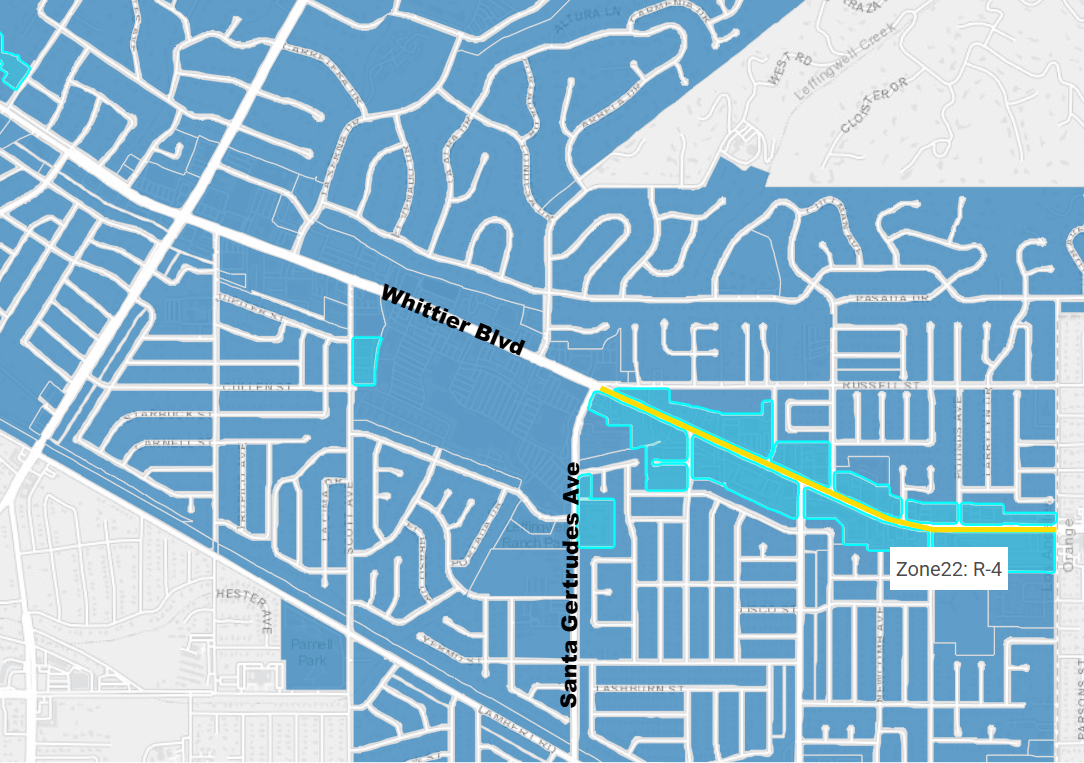
Santana's question is particularly striking given what was said when the city first took ownership in 2025. City council members and staff publicly discussed plans to widen Whittier Boulevard to six lanes wherever possible along its full length to help with traffic flow. The city also rezoned the eastern end of the boulevard, from Santa Gertrudes to Valley Home Avenue, to allow for high-density housing development. This will inevitably bring more residents and more traffic to a road the city is already struggling to fund.
McNamara, who was not yet with the city when those discussions took place, did not indicate whether any of those ideas have been further developed. It remains unclear whether developers building on the newly rezoned land will be required to contribute to boulevard improvements as part of future development.
A Growing Deficit
The financial picture makes the question more urgent. The city is already projecting a $3.6 million budget shortfall for 2026-27, expected to grow to $9 million by 2030. The city has been spending more than it brings in for years, drawing on savings to make up the difference.
When asked about long-term solutions, McNamara pointed to growing sales tax revenue as a key path forward. His plan includes working closely with the Whittier Chamber of Commerce, the Whittier Uptown Association, and the Uptown Whittier Improvement Association to drive more business activity along Whittier Boulevard and in the Uptown area. The boulevard is being counted on as part of the solution to the city's financial pressures. But attracting more business takes time, and the bills for maintaining the road are already here.
What Comes Next
The 2026-27 budget proposal returns to the city council on May 12, where further discussions on the city's finances and Whittier Boulevard are expected. The budget must be finalized by June 30.
The council has yet to direct staff to develop a formal plan for Whittier Boulevard, or identify how to pay for one. What is clear is that the city took on a permanent obligation. The question now is whether it has a permanent plan to match.