The Councilman Who Fought to Bring a Train to Whittier Is Leaving Office
Fernando Dutra lost his Whittier City Council seat on April 14 — and under state law, that means he loses his Metro Board seat too. He's the current Board Chair, and the person most responsible for bringing the future light rail to Whittier. He's been fighting for it since 2008.
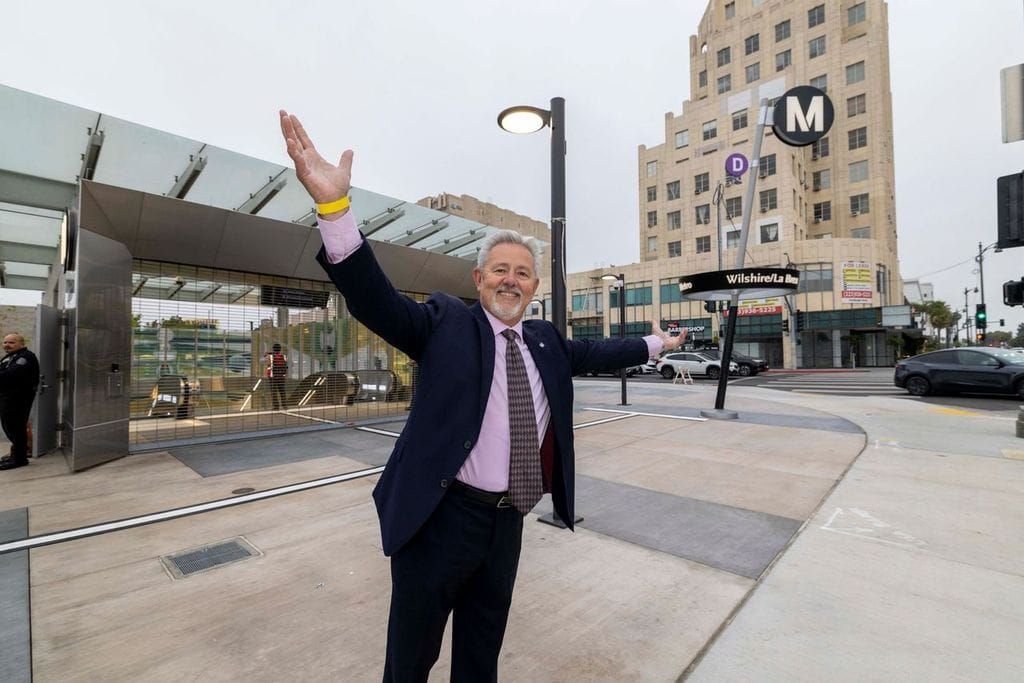
Fernando Dutra lost his Whittier City Council seat on April 14, and that loss comes with an unexpected consequence: he also loses his spot on the LA Metro Board of Directors.
Challenger Aida Susie Macedo beat him by a wide margin — about 67% to 27% — and Dutra conceded. Under state law, Metro's city-representative board seats can only be held by a sitting mayor or council member. When Macedo is sworn in on April 28, Dutra's council term ends and his Metro eligibility goes with it.
The timing is notable. Dutra isn't just a board member — he's the current Metro Board Chair. He's expected to run the April 23 board meeting and has said he plans to stay in the chair role through the end of June, when it was already scheduled to rotate to someone else on July 1.
He's the reason Whittier is getting a train
Before getting into how Dutra got onto the Metro board, it's worth understanding what he did while he was there — because the impact on Whittier is significant.
Metro is currently extending the E Line, its light rail that runs from Santa Monica through downtown LA and East LA, all the way to Whittier. When it's complete, Whittier will have a light rail station at Lambert Road near PIH Health Hospital, with direct rail access to the rest of Los Angeles County.
That was not always the plan.
For 13 years, cities across Southeast LA County were divided over where a rail extension should go. One camp wanted the line to run along the 60 Freeway toward South El Monte. The other wanted it to follow Washington Boulevard to Whittier. Dutra was on the Whittier City Council's Gold Line Light Rail Ad Hoc Committee and had been pushing the Washington Boulevard route since at least 2008 — more than a decade before the debate was settled.
The turning point came in February 2020, when Metro staff recommended dropping the 60 Freeway route entirely. The reasons were practical: Caltrans had plans to widen the 60, which would have blocked the rail corridor. The route ran through a Superfund toxic waste site. It crossed flood plains that the Army Corps of Engineers objected to. And Metro couldn't find a large enough piece of land for a maintenance facility anywhere along that stretch. On top of all that, a two-pronged extension would have meant trains running no more than every 10 minutes at peak hours — not exactly a strong case for getting people out of their cars.
The Metro board approved staff's recommendation that same month. The Washington Boulevard route to Whittier was in. The 60 Freeway route was out.
Less than a year later, Dutra was on the Metro board.
Getting on the board wasn't easy
In January 2021, the cities that make up the Gateway Cities subregion — Southeast LA County — voted to send Dutra to Metro. He beat out Bell Mayor Ali Saleh 87 to 74 in a weighted vote, where each city gets votes proportional to its population.
But that wasn't the finish line. Metro's city-representative seats also require ratification from the full LA County City Selection Committee, a countywide body of city mayors and representatives. When Dutra went before that group on January 25, he came up short — 243 votes, when he needed 262.
The opposition came from the Southeast Cities — Bell, Bell Gardens, Commerce, Cudahy, Huntington Park, Lynwood, and South Gate — a cluster of smaller, dense, heavily Latino cities that felt they had been left out of regional representation despite having some of the highest transit ridership in the county. They voted no.
Dutra went back to the Gateway Cities, got unanimously re-selected on February 18, and was ratified by the full committee on March 8, 2021. He replaced outgoing Long Beach Mayor Robert Garcia on the board.
Once he was in, he moved up steadily — Construction Committee member, then its chair, then Vice Chair of the full board, then Board Chair for the 2025–26 fiscal year. The first person from Whittier to hold that role.
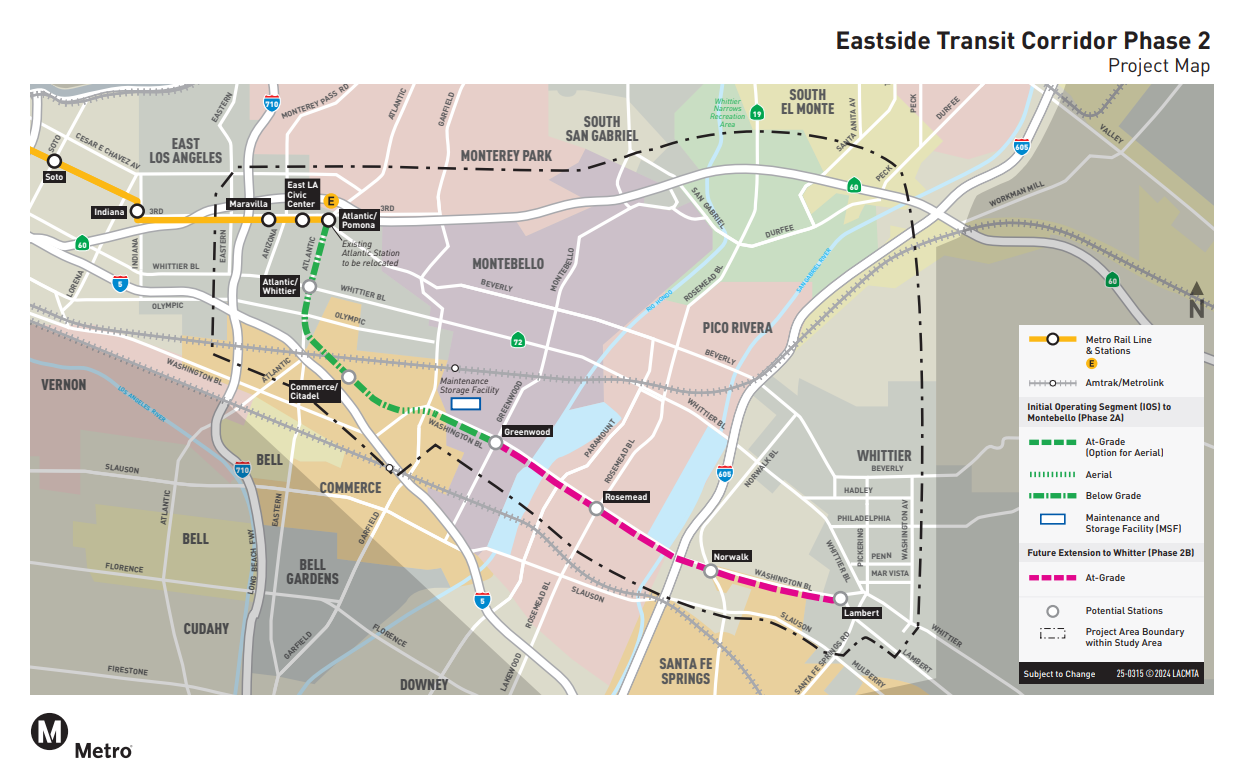
Throughout, the E Line extension was his main focus. In May 2024, the Metro board approved the project's final Environmental Impact Report — a major step that opened the door to federal funding and construction. At that meeting, Dutra walked the board through the route stop by stop, showing how the line would thread through Commerce, Montebello, Pico Rivera, and Santa Fe Springs before reaching Whittier.
The project is nine miles of new track in two phases. Phase 1 goes from the current East LA terminus at Atlantic Station through underground stops at Atlantic/Whittier Boulevard and the Citadel in Commerce, then to Montebello — targeted to open between 2029 and 2035. Phase 2 continues to the Lambert Road station in Whittier, with completion estimated between 2035 and 2037. Total cost: around $7.5 billion. About $6 billion is already committed through Measures R and M, with the rest to be pursued through federal funding.
What happens now
Dutra's seat doesn't just disappear — it has to be filled through the same process that put him there. The Gateway Cities subregion will hold a weighted vote among its mayors and council members, then send a nominee to the full LA County City Selection Committee for ratification.
In that vote, Long Beach holds 48 out of 173 total weighted votes — more than a quarter of the subregion on its own. Whittier has 9. Whoever Long Beach backs will have an outsized say in who gets the seat.
That matters because Dutra's replacement may not share the same priorities. Whittier is one of the more suburban cities in the Gateway Cities subregion. A new representative from Long Beach or one of the dense Southeast LA cities could bring a very different set of concerns to the board.
The E Line extension will keep moving forward either way. But Dutra spent nearly 17 years making sure Whittier was at the end of that line. He won't be on the board to see it open.
Metro's Eastside Transit Corridor Phase 2 fact sheet outlining the project timeline, funding, and planned stations from East LA to Whittier. (Document: LA Metro)