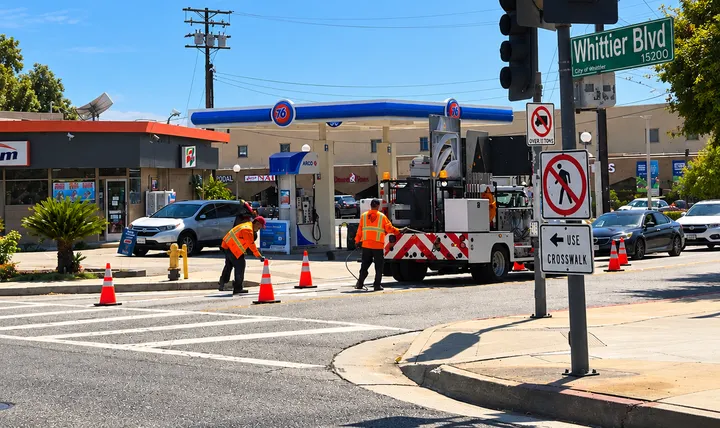
Whittier Gives Middle Managers a 17% Raise, Following the Executives' 27%
The raise passed even as the city's own budget shows a growing deficit and frontline workers keep negotiating over who pays for medical coverage.

On Tuesday, the Whittier City Council approved a roughly 17% raise over three years for the city's middle managers, the assistant directors, deputy directors, and division managers who run city departments just below the top executives. The raise came through a revised salary resolution, one that replaced a version the council had approved just two months earlier.
City paperwork sorts these employees into two tiers: Senior Management and Middle Management, or Level II and Level III on the city's own org chart. They're not the department heads themselves. They're the layer of staff just underneath them. A third group got the raise too: administrative and executive assistants the city calls "Confidential" employees.
"Confidential" doesn't mean anything secretive here. It's the city's label for administrative and executive assistants who handle sensitive personnel and labor information as part of their jobs.
Together, the three groups cover over 40 job titles. The resolution doesn't say how many people actually hold those positions, so the number of employees getting this raise isn't clear from the documents.
We compared the resolution the council just approved against the one it replaced, line by line, to find out.
What actually changed
Nearly every salary range for those three groups is exactly 6% higher in the August resolution than it was in June.
A few examples:
An Assistant Director of Community Development's pay range went from $10,373 to $13,788 a month, up to $10,995 to $14,615.
An Accountant's range went from $6,052 to $7,871 a month, up to $6,415 to $8,343.
An Executive Assistant to the City Manager went from $6,801 to $8,842 a month, up to $7,209 to $9,373.
Every comparable title we checked showed the same 6% jump. That's the first-year piece of a three-year raise. There is another 5% in 2027 and another 5% in 2028, each one building on the year before. Stacked together, that comes out to about 17% in total pay growth over three years.
Where this fits into a bigger pay story
This isn't the only Whittier pay story in play right now.
In March, three weeks before the April election, the outgoing council approved a roughly 27% raise over three years for the city's top executives. That raise moved through a separate resolution and isn't the one covered here.
Neither resolution is transparent about what that 27% raise actually costs the city. This August resolution at least discloses a cost for the group covered here: about $432,000 for the first year of the 6% raise alone.
City Manager Conal McNamara also received an immediate 19% increase on his own separate track, bringing his base salary from $306,648 to $365,000, less than a year into the job. That's on top of a severance package that can reach $547,500 and a city vehicle for a year.
Meanwhile, frontline workers, the people who fix water lines, maintain parks, and keep the city's day-to-day operations running, are still negotiating their own contract. They aren't included in either raise.
On June 23, the labor attorney representing the Whittier City Employees Association, Brian Niehaus, told the council that frontline workers are being asked to pay thousands more for their medical coverage while executive staff aren't being asked to pay a dime more.
If Niehaus's account holds up, the managers getting this month's 17% raise are also among the group that wouldn't be asked to pay more for medical, the same benefit frontline workers say they're being denied.
The backdrop: a budget that's already short
Whittier's budget is already short, and the city's own numbers say it's only going to get worse. The General Fund is running a $3.9 million deficit this year, and the city is covering that gap with reserves, including money set aside to cushion rising pension costs. Its own five-year forecast shows that gap growing to roughly $9.4 million a year by 2028-29, before those reserve draws even kick in.
The city approved a 27% raise for executives in March, a separate 19% raise for the City Manager, and now this 17% raise for the managers covered here. All three landed while the city was telling residents its main budget doesn't balance on its own.
Two pay changes in five months, with a third likely coming
Since March, city salary decisions have come in pieces instead of all at once. Department directors and other top executives got their roughly 27% raise that month. Now, in August, it's the turn of the assistant directors, deputy directors, and division managers covered in this piece. That's two separate salary changes in five months, and there's likely a third coming once frontline workers and the city settle the contract they're still negotiating.
Whether that's careful planning or piecemeal decision-making, one thing is clear: the city isn't setting pay once a year anymore. It's setting it every few months, one group at a time.